
Cleaning out the Old Leaven
Let us therefore celebrate the festival, not with the old leaven, the leaven of malice and evil, but with the unleavened bread of sincerity and truth.” 1 Corinthians 5:6-8 ESV
Have you ever pondered Passover and the 7- day Feast of Unleavened Bread and what it means to us as believers in Jesus? In preparation for our house church’s celebration of Passover this week, I was doing just that. The story of Passover, along with God’s instructions to Moses concerning the perpetual celebration of these Feasts is found in Exodus 12. One instruction was highlighted to me: the cleaning out of all leaven. What would that mean to us today? Is it just a physical thing? If we got rid of all the bread and only ate unleavened bread for 7 days, we must have kept the feast, right? If we want to just go through the motions and obey the letter of the law, sure. But surely God is concerned about deeper things than what kind of bread we eat. What does that leaven represent? Early one morning the words “leaven of malice” came into my spirit and I knew I had the answer. I found it in 1 Corinthians 5:8 where Paul is dealing with a sin issue in the Corinthian church.
“Your boasting (about sin) is not good. Do you not know that a little leaven leavens the whole lump? Cleanse out the old leaven that you may be a new lump, as you really are unleavened.
For Christ, our Passover lamb, has been sacrificed.
Let us therefore celebrate the festival, not with the old leaven, the leaven of malice and evil, but with the unleavened bread of sincerity and truth.”
1 Corinthians 5:6-8 ESV
There it was - right in the context of recognizing Christ as our Passover Lamb with instructions for us, as believers in Jesus, of how we should celebrate this Passover feast.
I wondered what exactly is “malice?”
It isn’t a word I often use or think about, so how does it even relate to me? Reading verses in other translations as well as searching out the meaning of the word in the original language and consulting a dictionary often helps to clarify things. This time it was The Passion Translation that opened up the meaning for me. They used the word “bitterness” instead of “malice.” This reminded me of the “root of bitterness” referred to in Hebrews 12:15.
“See to it that no one fails to obtain the grace of God; that no “root of bitterness” springs up and causes trouble, and by it many become defiled;” Hebrews 12:15 ESV
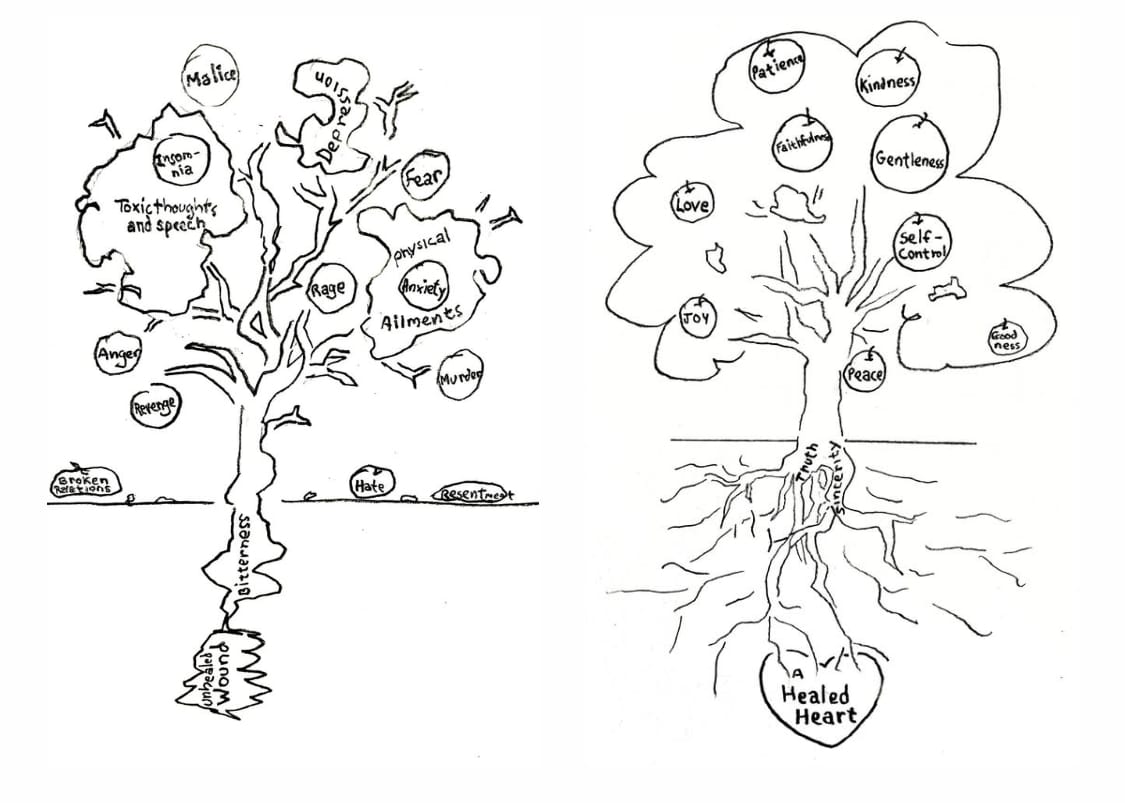
I then saw a picture of an unhealed, unforgiven wound at the base of the root called bitterness. This was all below the surface, supporting a tree that was producing so much bad fruit! Here were some of the fruit: anxiety, insomnia, physical ailments, revenge, resentment, obsessive toxic thoughts and speech, anger, broken relationships, rage, malice, hate, murder, and more… It is very easy to see how this leaven of bitterness can leaven the whole lump (yourself), or as the writer of Hebrews says, defile many. Bitterness rarely only impacts ourselves, which it does very thoroughly, but it catches many into its expressions and manifestations. No wonder we are exhorted in both of these passages to get rid of it.
Jesus addressed this root issue in the sermon of the Mount in Luke 6:43-45
““For no good tree bears bad fruit, nor again does a bad tree bear good fruit, for each tree is known by its own fruit. For figs are not gathered from thorn bushes, nor are grapes picked from a bramble bush. The good person out of the good treasure of his heart produces good, and the evil person out of his evil treasure produces evil, for out of the abundance of the heart his mouth speaks.” Luke 6:43-45 ESV
So we must ask ourselves a few questions. What is coming out of our mouths? What is in our hearts? What is the fruit in our lives? If our hearts are filled with pain, unforgiveness, and bitterness, my guess is that negative, maybe even hurtful words are pouring out.
But the Father is gracious and compassionate. He sent Jesus to heal the broken-hearted and to set the captives free.(Isaiah 61:1-3) So today why don't you bring Him your wounds? Bring Him your pain and the things that have caused you offence. Ask the Lord to heal those wounds and ask for the grace to forgive those who have hurt you. Then choose to forgive and let go of all the bitterness. Let the Holy Spirit cleanse your heart and mind of it.
This honest conversation with God about your pain, forgiving those who hurt you and repenting (turning away) from holding bitterness will set you free to live the unleavened life of sincerity and truth that Paul talks about in 1 Corinthians 5:8. This is what the Father desires: “truth in the inward being.” Psalm 51:6.
Imagine then what good fruit will grow out of a healed heart with sincerity and truth as the root.
“But the fruit of the Spirit is love, joy, peace, patience, kindness, goodness, faithfulness, gentleness, self-control; against such things there is no law.”
Galatians 5:22-23 ESV
What other good fruit do you think will result? Drop some answers below 👇🏻